
A landing page usually focuses on a particular audience, offer or next action. A website provides the broader collection of information people may need to understand and evaluate a business. A landing page can be part of that website.
For a service business, the choice depends on the visitor’s task. Someone responding to a specific campaign may need a focused enquiry route. Someone researching a provider may need services, evidence, process details and answers before contacting anyone.
Compare the job each format needs to do
| Decision | Focused landing page | Broader website |
|---|---|---|
| Primary purpose | Explain one offer and support a next step | Support several stages of research and contact |
| Typical content | Audience fit, offer, relevant proof, enquiry action | Services, locations, articles, evidence and company information |
| Navigation choice | Prioritize the visitor’s campaign task | Help visitors explore related decisions |
| Measurement | Assess the offer and its enquiry path | Assess journeys across pages and services |
These are planning distinctions. A long page can still be focused, and a short page can still leave essential questions unanswered.
What our campaign-page work illustrates
SERP Radius prepared native WordPress campaign landing-page drafts with focused enquiry actions, relevant evidence and short forms. Our main website serves a broader purpose through service explanations, articles, city pages and case studies.
During the campaign audit, an important issue was public availability: pages could be visible while logged into WordPress yet remain unpublished drafts. A polished preview did not establish that a prospective customer could reach the destination.
The lesson applies to both formats. Check the public page, its mobile journey, successful form handling and reporting separately. Design approval is one milestone in making a page usable.
Example: a single-service campaign
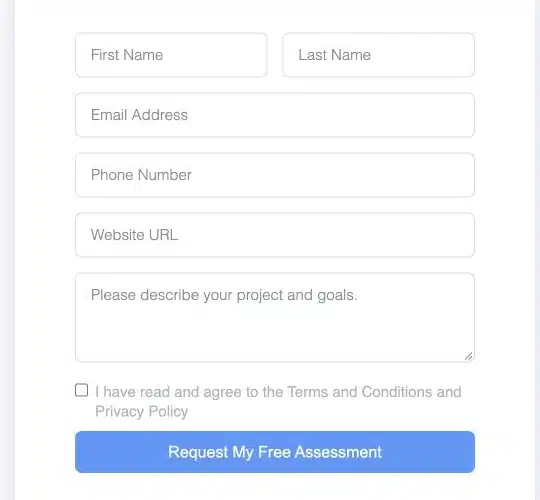
Consider a fictional accounting firm promoting a business-tax consultation. A focused page could explain who the consultation is for, what documents are helpful, what the appointment covers and how to request it.
That page may still need links to the firm’s credentials, privacy information and relevant evidence. Reducing distraction should not mean hiding information required for a confident decision.
A separate general accounting page can explain the firm’s wider services. The two pages serve different tasks if their audience and offer are genuinely distinct.
Example: an owner comparing agencies
An owner researching SEO may arrive with several unresolved questions: how the engagement works, who implements changes, what reporting includes and whether the provider has relevant examples.
A broader website can connect those questions through commercial service pages, agency-selection guidance and case studies. A contact button alone may not address what that visitor needs.
Our recommendation is to map the decision before selecting the layout. Write down what a person already knows when they arrive and what they need to decide next.
Can a landing page rank on Google?
The label does not determine eligibility. Google publishes technical requirements for Search and guidance on helpful content. A page intended for organic search needs a clear purpose and useful content, alongside appropriate technical access.
An ad campaign page and an existing service page should not be made to compete accidentally for the same purpose. Decide which page owns the organic intent before publishing. Different campaign offers may warrant different treatment; the right indexing or canonical decision depends on the actual pages.
What to verify before launch
Our recommended review follows the visitor’s sequence:
- Open the final URL without an administrator login.
- Confirm the headline matches the offer that brought the visitor there.
- Review the evidence and ensure its location, timeframe and attribution remain accurate.
- Test the mobile page and the actual enquiry path.
- Verify successful submission and notification delivery separately.
- Check event delivery, consent behaviour and duplicate prevention.
- Assign responsibility for reviewing enquiry quality.
A technical event firing does not prove that a notification arrived. A delivered notification does not prove the enquiry is qualified. Keep those checks visible in the launch record.
How to choose when your budget is limited
Improve the page that serves your current acquisition plan. If relevant visitors already reach a service page but cannot understand the offer, clarify that journey. If a focused campaign has a distinct offer, assess whether a dedicated page would answer it better.
Use SEO reporting that separates traffic from enquiries and review the redesign checklist before changing established URLs.
If you need help deciding which page should serve a search intent and how it should connect to the rest of the website, discuss the plan with SERP Radius.